



Measuring and analyzing equipment
-
-
-
-
-
-
-
-
-
-
-
-
-
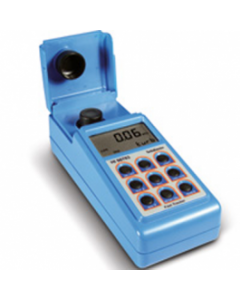
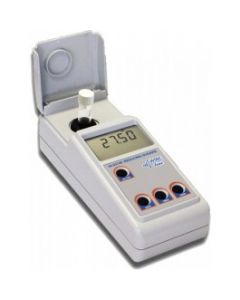
Portable turbidimeter for drinking water, USEPA 180.1, traceability management
€1,380.00 €1,150.00HI98703-02 -
-
Measuring and analysis equipment is essential for controlling the quality of your wines, musts and process waters, from harvest reception to bottling. They enable you to work with reliable data, secure your oenological decisions and meet regulatory and commercial requirements.
What is the purpose of measuring and analysis equipment?
Both in the cellar and in the laboratory, measuring and analysis equipment is used to monitor key parameters in real time: pH, total acidity, free and total SO2, residual sugars, probable alcohol, dissolved oxygen, turbidity, conductivity and temperature. They enable you to check that fermentations are running smoothly, anticipate deviations (oxidation, microbiological deviations, protein instabilities) and fine-tune inputs (SO2, assimilable nitrogen, acidity corrections, fining).
This equipment also contributes to the traceability of your vintages and compliance with AOC and IGP specifications, as well as with customer requirements (trade, export, mass distribution). By making your measurements more reliable, you can increase the precision of your blends, secure your bottlings and optimize the consistency of your wines from one vintage to the next.
Types of measurement & analysis equipment available from E-viti
Mini-filters and targeted chemical analyses
For routine analysis in the cellar, mini-filters offer a fast, accurate and easy-to-use solution.
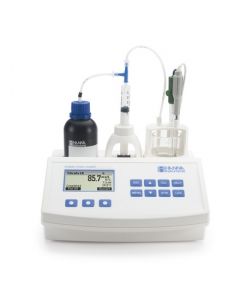
- Special wine mini-filters for measuring total acidity: ideal for checking the acid balance of musts and wines prior to fermentation, ageing or bottling.
- Special wine mini-filter for measuring free and total SO2: indispensable for adjusting sulfur doses, controlling oxidation and complying with regulatory limits.
- Mini assimilable nitrogen and pH meter: for monitoring assimilable nitrogen (YAN) and pH of musts, to anticipate risks of sluggish fermentation or aromatic deviations.
- Kit of tubes and cap for titration, with attachment and valve: suitable consumables for securing and standardizing your titration series.
pH, redox and conductivity measurement
Controlling pH, redox potential and conductivity is central to wine stability and treatment management.
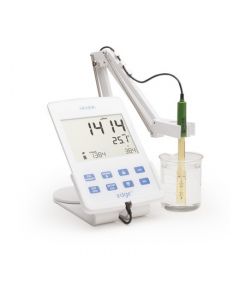
- Portable, waterproof pH/redox/EC multiparameter, 4 m cable: a versatile instrument for measuring pH, redox potential and conductivity, for use both in the tank and in the laboratory.
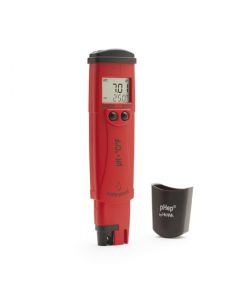
- Oenology pH tester: compact solution for quick cellar checks.
- Pocket pH- and T°-meter with 0.1 pH resolution: precise field tool for monitoring pH and temperature.
- Wireless pH meter and electrode for wine and must: for connected measurements and improved data traceability.
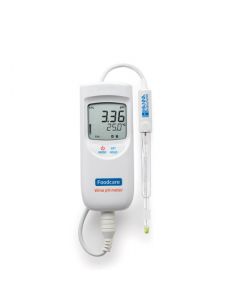
- Compact pH meter for wine and must: dedicated device for oenological matrices, easy to use on a daily basis.
- Conductivity meter (tablet format): to measure conductivity and assess the salt content and quality of water or certain inputs.
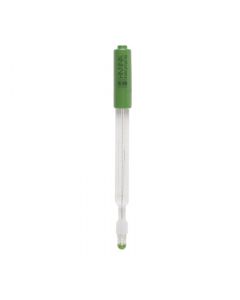
- pH electrode for wine and must, BNC, 1 m cable: specific electrode adapted to charged and colored matrices.
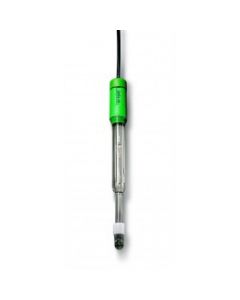
- Combined redox electrode for wine, 50 cm cable: designed to monitor redox potential in wines.
Dissolved oxygen measurement
Oxygen management is crucial for preserving aromatic potential and limiting oxidation.
- Portable LDO oximeter, with digital optical probe: enables precise measurement of dissolved oxygen in musts, wines and waters, both in the cellar and online, with a stable, low-maintenance optical probe.
Refractometers and sugar/alcohol measurement
Several solutions are available for monitoring grape maturity, must sugar content and estimating probable alcohol.
- Mettler MyBrix refractometer: for rapid measurement of sugars (Brix) in grape juice or must.
- Digital refractometer for viticultural use, probable alcohol: dedicated to viticultural use to directly estimate probable alcohol from sugar content.
- Wine residual sugars photometer: for precise quantification of residual sugars to ensure safe bottling (risk of refermentation, semi-dry or sweet profile, etc.).
Densimeters, alcoholometers and specific measurements
A number of instruments are essential for monitoring fermentation and characterizing wines.
- Densimeter / Cidrometer: to monitor the density and richness of cider musts.
- Mustimeter: specific densimeter for monitoring fermenting grape musts.
- Alcoholmeter: for estimating the alcoholic strength by volume of distillates and certain hydroalcoholic matrices.
- Thermo alcoometer: combines alcohol measurement and temperature, for a more reliable reading.
- Vinometer: practical tool for rapid estimation of alcoholic strength in still wines.
Thermometers and temperature probes
Temperature has a direct influence on fermentation kinetics, oxygen solubility and wine stability.
- Type K thermocouple food thermometer: suitable for temperature control in food processing environments.
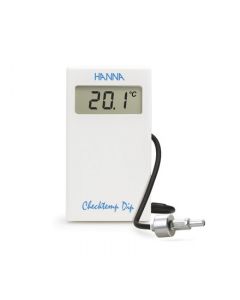
- Precision thermometer with fixed Checktemp® probe: for fast, reliable measurements in vats, cellars or laboratories.
- Precision thermometer with remote probe Checktemp®1 : for measurements at a distance or in less accessible areas.
- Pocket thermometer with 3 m cable: practical for remote or deep measurement points.
- Type K thermocouple temperature probe, 3 m cable: compatible with your type K devices for stable measurements.
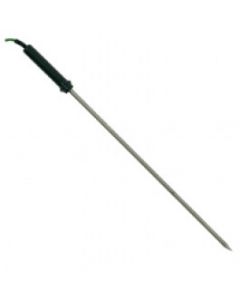
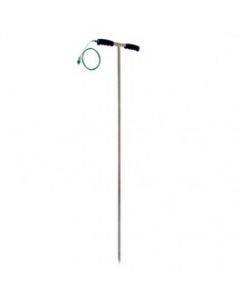
- Penetration thermocouple probe: for measuring deep inside products or fermenting masses.
- Penetration thermocouple probe for compost: specifically for monitoring the temperature of compost and organic soil improvers.
Turbidimeters, protein stability and water quality
Turbidity and protein stability are important parameters for wine filtration, clarity and stability.
- Portable turbidimeter for drinking water, USEPA 180.1, traceability management: to control turbidity in process water and ensure conformity.
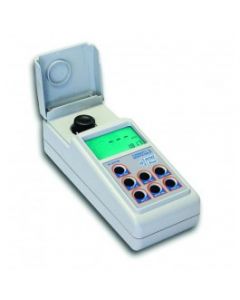
- Portable turbidimeter and protein stability: dedicated to monitoring wine turbidity and evaluating protein stability before bottling.
Advanced analysis and sample preparation
For certain regulatory or advanced chemical analyses, additional equipment is available.
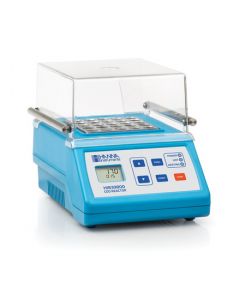
- Thermoreactor for COD digestion, 230V: for sample preparation for chemical oxygen demand measurements (cellar water, effluent).
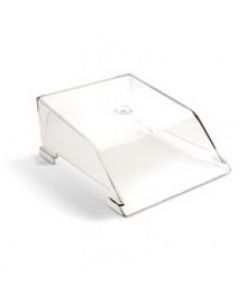
- Safety lid for thermoreactor: for safe use in compliance with good laboratory practice.
How to choose your measurement & analysis equipment?
Your choice of equipment depends first and foremost on your cellar profile: size of operation, number of vintages, frequency of analyses and desired level of autonomy in relation to an external laboratory. For a winery wishing to be more reactive, mini-filters (acidity, SO2, assimilable nitrogen), wine-specific pH meters and digital refractometers are a very effective base.
It's also important to consider the analysis medium: wine, must, drinking water, effluent, compost... Electrodes and probes dedicated to oenological matrices (pH, redox, oxygen) guarantee more reliable results and longer equipment life. Finally, think about ergonomics (portable vs. laboratory format, wireless, built-in memory), traceability of measurements (data recording, export) and availability of consumables (tubes, caps, calibration solutions, replacement probes).
Why choose e-viti for your measurement & analysis equipment?
E-viti offers a selection of measuring and analysis equipment specifically designed for the wine and fermented beverage industries, from independent wineries to large cooperative wineries. You'll find both portable instruments for the field and more complete equipment for the cellar laboratory, as well as probes, electrodes and associated accessories.
The range covers all key requirements: pH, SO2, acidity, assimilable nitrogen, residual sugars, probable alcohol, dissolved oxygen, turbidity, temperature and conductivity, enabling you to structure a truly coherent quality control chain. In addition, the e-viti team can guide you towards the solutions best suited to your production profile and constraints (budget, level of automation, regulatory requirements), in order to secure your technical decisions and the consistency of your wines.