



How can we help our vines in the event of drought or extreme heat?
In the face of intensifying drought and heat waves, vines - renowned for their hardiness - are under increasing pressure. Water deficit and extreme temperatures can slow plant growth, disrupt berry ripening and alter the aromatic balance of wines. In this context, winegrowers need to adapt their cultivation practices to protect their vines and guarantee harvest quality. Rational water management, protection of soil and foliage, choice of more resistant varieties and adjustments to vineyard management are all essential levers for limiting the impact of climatic stress and preserving the long-term viability of their operations.
1. Understanding the impact of climate on vines
A. Impact of drought and extreme heat on vines
Drought and extreme heat exert considerable stress on vines, affecting both vegetative development and grape quality. Lack of water reduces nutrient availability and slows the growth of both shoots and leaves. Young shoots can dry out, while leaf area decreases, limiting photosynthesis and thus the plant's ability to produce the sugars needed for berry ripening.
High temperatures accentuate this phenomenon, causing rapid evapotranspiration and a risk of stomatal closure, a defense mechanism that blocks gas exchange but also slows photosynthesis. Bunches exposed to intense sunlight can suffer direct burns: grape skins turn brown, pulp dehydrates and sugar concentration increases faster than phenolic ripeness, leading to an imbalance between potential alcohol, acidity and aroma.
In the long term, prolonged drought can weaken the root system and compromise production in subsequent years. These extreme conditions therefore threaten not only the current harvest, but also the long-term survival of the vines, forcing winegrowers to rethink their cultivation practices to limit the impact of these climatic stresses.
B. Physiological effects of water stress on vines
Water stress caused by drought or insufficient water availability triggers a series of physiological reactions in vines, as they seek to preserve their vital functions.
When soil water becomes scarce, the vine progressively closes its stomata, the small orifices located on the underside of the leaves. This closure limits water loss through transpiration, but at the same time reducescarbon dioxide absorption, slowing down photosynthesis and thus the production of sugars essential for grape ripening.
Lack of water also alters the plant'shormonal balance, increasing the production ofabscisic acid (ABA). This stress hormone stimulates stomatal closure and regulates growth, often slowing down the development of young shoots and reducing leaf area.
The berries also react: their growth is restricted, their volume diminishes and their concentration of sugars and phenolic compounds can rise more rapidly, influencing the wine's alcohol content and tannin structure. At the same time,total acidity falls more rapidly under the effect of high temperatures, which can unbalance the aromatic profile.
In the long term, if water stress is severe and repeated, the vine mobilizes its reserves and may see its root system weaken, reducing its ability to draw water from deep within the soil and compromising production in subsequent years. In this way, water stress affects not only the current harvest, but also the long-term health of the vineyard as a whole.
2. Preventive solutions to prepare vines for periods of drought
A. Appropriate soil management to conserve moisture
Appropriate soil management is essential. Controlled grassing, whether permanent or temporary, helps to improve soil structure and water retention capacity, while reducing erosion. However, water competition must be controlled by adapting mowing or rolling. Organic mulching, using straw, shredded vine shoots or compost, reduces evaporation and maintains a more constant moisture level at root level. The soil must be worked superficially to preserve the capillaries that retain water.
B. Pruning and management techniques to limit evapotranspiration
To limit evapotranspiration and preserve soil moisture during periods of drought, certain pruning and vine management practices are particularly effective. They aim to regulate leaf area and protect bunches, while maintaining the balance between vegetative growth and grape ripening.
The winter pruning must remain moderate to avoid excessive vigor in the spring, which would lead to excessive development of the leaf surface and therefore greater transpiration. A well-adjusted bud load limits foliage density while ensuring balanced production.
During the vegetative season, it is essential to carry out rational leaf thinning. Removing only the leaves around the bunches on the side least exposed to the sun (usually the rising side) promotes aeration and limits the risk of disease, while maintaining protective shade on the hottest side (often the setting side). This approach reduces berry scorch and avoids increased water stress.
Management of foliage height must also be carefully considered: maintaining sufficient leaf surface ensures optimal photosynthesis and natural shading of the soil, which reduces evaporation. Trimming too short exposes the soil and bunches to direct radiation, accentuating dehydration.


C. Choosing grape varieties and rootstocks resistant to water stress
Choosing the right grape varieties and rootstocks is a key factor in preparing a vineyard for drought and hot weather. Some naturally have morphological and physiological characteristics that enable them to better resist water deficit, either by limiting their water requirements or by exploring the deeper layers of the soil more effectively.
More drought-tolerant varieties
Varieties with long cycles, thick foliage or thicker-skinned berries are generally better able to withstand periods of high heat. Examples often cited in European vineyards include Syrah, Grenache, Carignan, Mourvèdre, Cinsault and, in white, Vermentino (Rolle) and Clairette. These grape varieties are commonly grown in Mediterranean regions, where they have developed good resistance to water stress. In more northerly regions, some growers are also turning to late-ripening varieties such as Cabernet Sauvignon, which can withstand a hotter, drier climate.
Drought-resistant rootstocks
The role of the rootstock is decisive, as it develops the root system and determines the vine's ability to draw water from deep underground. Rootstocks derived from crosses of Vitis berlandieri, a species naturally adapted to dry, chalky soils, are renowned for their tolerance. Among the most widely used are :
- 110 Richter (110 R): very vigorous, with deep roots, adapted to dry, stony soils.
- 140 Ruggeri (140 Ru): particularly drought-resistant, ideal for poor, chalky soils.
- 1103 Paulsen (1103 P): good compromise between vigor and adaptation to dry soils, widely used in Mediterranean climates.
- 41 B Millardet et de Grasset (41 B): well adapted to dry, calcareous soils, but with more moderate vigor.
3. Protective measures during heatwaves
During a heatwave, it is crucial to act quickly to limit the effects of intense radiation and extreme temperatures on vines and bunches. These interventions, which are essentially temporary, aim to reduce air and soil temperatures around the vines, protect foliage and prevent berry burn :
- Maintain a protective canopy : Avoid any severe leaf-thinning or trimming just before or during the heatwave. Leaves act as a natural screen against the sun.
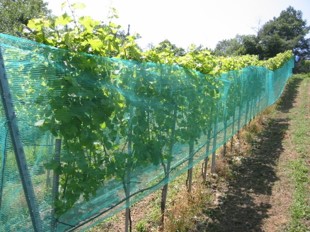
- Use nets or shade cloths In the most sensitive plots or young plantations, the temporary installation of shade netscan reduce the temperature felt by the bunches and limit scorching.
- Clay- or kaolin-based sprays : Some farms use reflective products (micronized white clay, kaolin) as foliar sprays. These mineral films act as a natural sunscreen, reducing radiation absorption and berry temperature.
- Reasoned irrigation management: If authorized by local regulations, drip irrigation or targeted watering or targeted watering during the coolest hours (early morning or evening) helps maintain a minimum of humidity in the root zone, without causing thermal shock.
- Soil protection : Maintaining mulch (straw, shredded vine shoots, compost) limits evaporation and keeps the soil cooler. Well-managed plant cover can also act as a buffer, but must be controlled to avoid water competition.
A. Reasoned irrigation: when and how to water vines
Reasoned irrigation aims to provide the vines with just the right amount of water, at just the right time, to support the plant without disturbing grape quality or depleting resources. This approach is all the more important as many wine-growing regions are subject to water restrictions, and over-irrigation can dilute aromas or encourage excessive vegetative growth.
Watering should only be considered when water stress becomes detrimental, which can be detected by several indicators: reduced leaf turgor, slower growth of young shoots or measurement of leaf water potential (using a pressure chamber) indicating a marked deficit. The most critical periods are :
- during flowering and fruit set, to ensure good fertilization and berry formation;
- at the start of veraison, when berries begin to change color and accumulate sugar;
- in the event of prolonged summer drought, if the condition of the vines threatens their ripening or survival.
On the other hand, over-watering at the end of ripening can dilute the sugars and alter the aromatic balance.
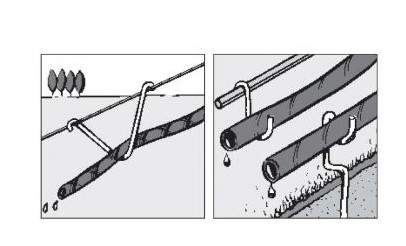
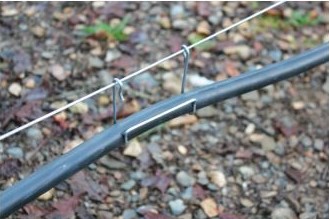
The most effective method is drip irrigationwhich delivers water directly to the roots, limiting evaporation and the development of disease. Water should be applied moderately and in fractions, to stimulate deep rooting rather than superficial rooting.
Early morning or evening applications are recommended, when temperatures are lower, to reduce evaporation losses and avoid thermal shock. Soil moisture probes or tensiometers can be used to fine-tune the frequency and volume of inputs.
In conclusion, in the face of drought and heat waves, vines are confronted with hydric and thermal stress that can compromise both their health and the quality of their grapes. Understanding the physiological mechanisms of stress and its effects on the plant enables us to implement effective strategies to limit its impact. The combination of preventive practices - choice of resistant grape varieties and rootstocks, rational soil management, mulching, adapted pruning and training - and specific protective actions - controlled irrigation, shading of bunches, reflective sprays - constitutes a complete arsenal for preserving the vine. By adopting these measures, winegrowers can not only mitigate the immediate effects of heat waves, but also strengthen the resilience of their vineyards in the face of the challenges of climate change, thus ensuring the sustainability and quality of their production.