



Vineyard planting methods
The planting method chosen for a vineyard directly conditions the vigor of the vines, their longevity and the quality of the production. Careful planting, adapted to the terroir and growing objectives, promotes uniform growth and simplifies future maintenance operations. From soil preparation to post-planting follow-up, each stage plays a decisive role in the success of the vineyard.
-
Preparing the soil before planting
Careful soil preparation is the foundation of a sustainable vineyard. It aims to create an environment favorable to deep rooting and good plant nutrition.
a. Weeding and ploughing
Prior weeding eliminates weed competition with young plants. Depending on the cultivation practices adopted, this may be mechanical or, more rarely, chemical. The aim is to sanitize the plot before any intervention.
Ploughing, or deep tillage, improves soil structure by promoting aeration and drainage. Decompacting may be necessary if the soil shows signs of ploughing or compacted areas. This step facilitates root penetration and optimizes the circulation of water and nutrients.
b. Amendments and fertilization
Soil analyses guide the application of organic or mineral amendments. Calcareous or organic amendments correct structure and pH, while basic fertilization ensures sufficient nutrient reserves for the first few years of growth.
Incorporating compost or well-decomposed manure improves the soil's biological life and water retention capacity. Reasoned fertilization avoids excesses, which could lead to unbalanced vegetative growth to the detriment of grape quality.
-
Planting techniques
The choice of planting technique depends on the topography of the land, the climate and the growing system envisaged.
a. Line planting
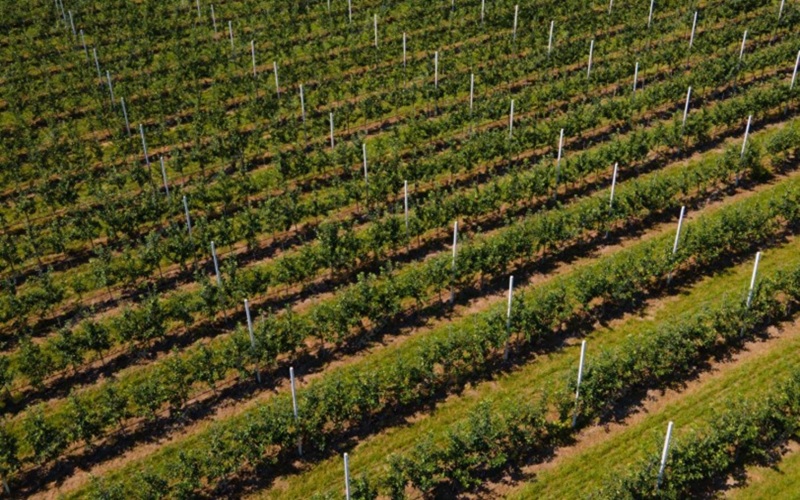
Line planting is the most widespread method. Straight rows facilitate mechanization, circulation within the plot and routine maintenance. Plants are planted at regular intervals, ensuring even distribution of light and resources.
This organization also optimizes pruning, treatment and harvesting operations. It is particularly suitable for flat or slightly sloping plots.
b. Espalier planting
Espalier planting is based on a structured trellising system. The vines are trained along wires stretched between stakes, forming a plant wall. This technique improves exposure to the sun, aeration of the vegetation and reduces the risk of fungal diseases.
It is often used in regions where vigor control and the sanitary quality of bunches are priorities. The espalier also facilitates certain manual or mechanical operations.
c. Planting on terraces or hillsides
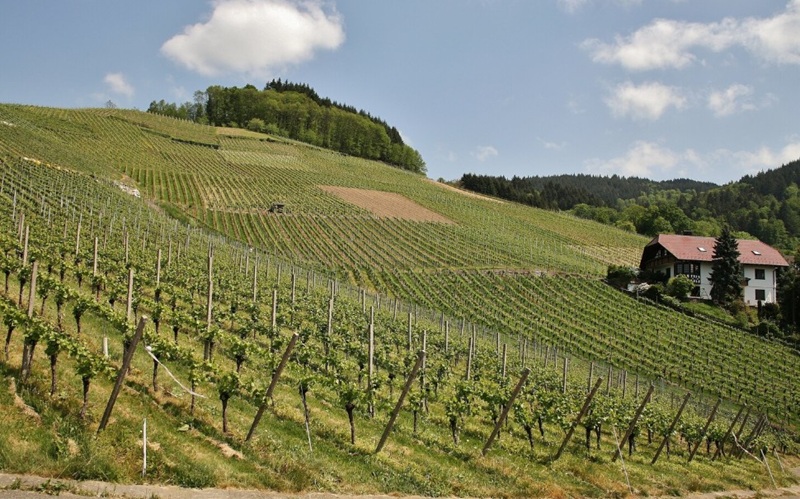
On steep slopes, planting on terraces or hillsides helps stabilize the soil and reduce erosion. Terraces create successive flat surfaces that make work easier and the planting of vines safer.
This method makes the most of uneven terroirs while optimizing exposure to the sun. It does, however, require significant initial investment in layout and maintenance.
-
Spacing, stakes and supports
Spacing between plants and rows influences root competition, air circulation and light penetration. Spacing adapted to the grape variety and soil fertility promotes balanced vine development.
Stakes play an essential role in the early years. They keep young plants upright, protect shoots from the wind and guide growth. Permanent support systems, such as stakes and trellis wiresstructure the vineyard and determine the type of management chosen.
-
Post-planting monitoring for optimum recovery
After planting, careful monitoring ensures that the vines take root. Initial watering promotes contact between roots and soil, especially in dry conditions. Regular monitoring enables early detection of signs of water stress, deficiency or parasitic attack.
Replacing defective plants, keeping the soil around the vines clean and protecting them from game or bad weather all contribute to the homogeneity of the vineyard. During the first few years, appropriate training pruning structures the future architecture of the plants and paves the way for quality production.
Methodical planting, combined with rigorous monitoring, forms the basis of a high-performance, long-lasting vineyard.
Find on e-viti our planting equipmentPlavi vine planters, stakes, protective sleeves, stakes, etc.