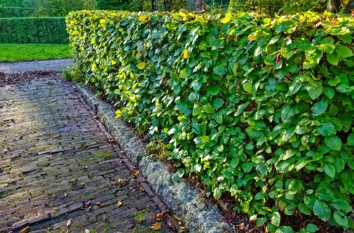


Choosing the right hedge trimmer.
Regular hedge trimming is essential to keep your garden looking neat and tidy, promote good plant growth and maintain clear boundaries around your outdoor space. To carry out this work in the right conditions, it's essential to have the right tool. Choosing the right hedge trimmer will not only enable you to work more efficiently, it will also improve cutting precision and reduce the fatigue and risks associated with using the tool.
With so many different models on the market, it can be difficult to find the right one for you. A number of criteria need to be taken into account, such as the nature of the hedge, the power of the machine and ease of use. By taking the time to assess your needs, it's easier to select a high-performance, durable hedge trimmer capable of meeting the demands of regular garden maintenance.
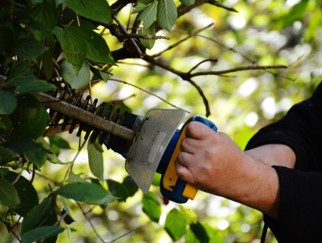
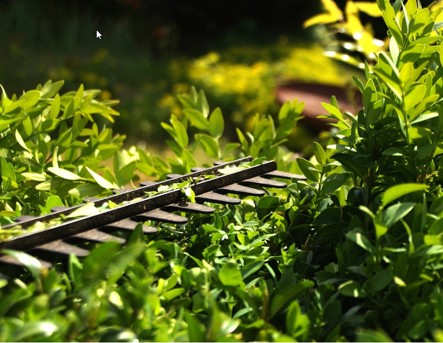
1. Main selection criteria
Hedge type and cutting length
The choice of hedge trimmer depends above all on the type of hedge to be maintained. Young, sparse hedges, or those made up of decorative shrubs, generally require a lighter, more precise cut. In this case, a hedge trimmer with a relatively short blade may be sufficient and offer better manoeuvrability.
On the other hand, for long, thick hedges, or those made up of vigorous species such as conifers, it's best to opt for a device equipped with a longer blade. A longer cutting length enables you to cover a larger area in a single pass, and achieve more uniform results. The distance between the teeth of the blade should also be taken into account, as it determines the tool's ability to cut thicker or thinner branches.
Adapting the cutting length and capacity of the tool to the type of vegetation allows you to work faster while guaranteeing a clean cut, essential for preserving plant health.
Power and motor type (electric, combustion, battery)
A hedge trimmer's power is a key element that directly influences its performance. The choice of motor depends mainly on the frequency of use and the surface area to be maintained.
Corded electric hedge trimmers are often used for small to medium-sized gardens. They are appreciated for their light weight, ease of use and limited maintenance. Their power is generally sufficient for regular maintenance of thin hedges.
Battery-powered models offer great freedom of movement, as they operate without cables. They are particularly suited to users looking for a practical, versatile tool for occasional pruning jobs. Recent advances in lithium-ion batteries mean that they now offer autonomy and power suitable for most domestic uses.
For intensive work or the maintenance of long, dense hedges, thermal hedge trimmers remain a high-performance solution. Equipped with a gasoline engine, it delivers significant power and can cut thicker branches. This type of appliance is often preferred by green space professionals or users with large plots of land.
Weight and ergonomics for prolonged use
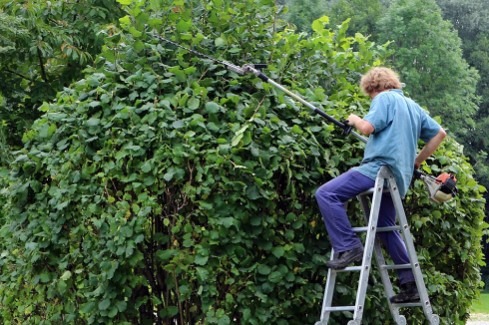
Comfort of use is an often underestimated yet essential criterion when choosing a hedge trimmer. A tool that is too heavy or poorly balanced can quickly lead to fatigue, especially when pruning for long periods or working at height.
The weight of the device must therefore be adapted to the user and the duration of the work. Lightweight models are easier to handle and ideal for regular maintenance of domestic hedges.
The ergonomics of the tool also play an important role. Non-slip handles, swivel handles and balancing systems improve manoeuvrability and enable you to work in different positions, particularly when trimming hedges vertically or horizontally.
An ergonomic hedge trimmer reduces physical effort, making gardening work safer and more comfortable.
2. Useful accessories and options
Additional blades and guards
Some hedge trimmers can be fitted with specific or interchangeable blades to adapt to different types of vegetation. High-quality, well-sharpened blades guarantee a clean cut and limit the effort required of the motor.
Blade guards are another important element. They protect the tool during transport and storage, and prevent accidental injury. Some models also incorporate vegetation deflectors to facilitate the evacuation of cut branches and improve visibility while working.
These accessories help to optimize the machine's performance while enhancing user safety.
Anti-vibration systems and safety
Anti-vibration systems are particularly appreciated during prolonged use. They reduce vibrations transmitted to the hands and arms, thus reducing muscle fatigue and improving working comfort.
Safety is also a key consideration when choosing a hedge trimmer. Many models are equipped with safety features such as dual controls, blade brakes or hand guards. These systems help to reduce the risk of accidents and ensure that the tool is used with greater peace of mind.
For regular users in particular, we strongly recommend choosing a machine equipped with these safety features.
3. Maintenance tips to extend service life
A well-maintained hedge trimmer retains its performance longer and guarantees efficient cutting. After each use, we recommend cleaning the blades to remove any residues of sap, leaves or small branches that may have accumulated.
Regular lubrication of the blades reduces friction and preserves cutting quality. Periodic sharpening is also recommended to maintain tool efficiency and avoid unnecessary strain on the motor.
Thermal models require regular engine maintenance, including air filter and fuel checks. Battery-powered hedge trimmers require careful management of battery charging and storage.
By adopting these good maintenance practices, you can significantly extend the lifespan of your hedge trimmer and guarantee optimum performance season after season.